
Pure Acrylic, Modified Solid Surface Basin and Stone Resin Basin: What Determines Durability, Yellowing, Cracking and Price?
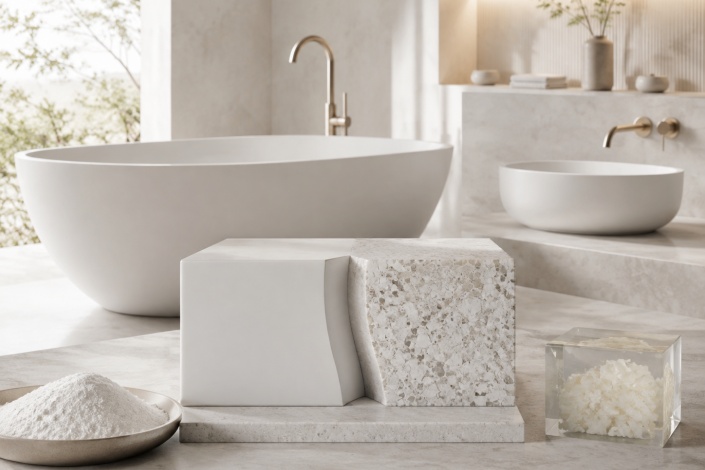
Two solid surface basins or bathtubs can look almost identical in a showroom but differ significantly in price and long-term performance.
The reason is usually hidden inside the product.
Material cost, resin, mineral filler, casting process and curing control all affect whether a product will maintain its color, resist hot-water exposure and avoid crazing or cracking after years of use.
This article explains the differences between pure acrylic solid surface, modified acrylic solid surface and products commonly described as stone resin. It also presents third-party test data from Gelo’s modified solid surface sanitary ware.
Two Material Questions Buyers Should Ask
A cast solid surface product normally contains two principal components:
* A polymer resin that binds the material together
* A mineral filler that provides body, stiffness and mass
These components must be evaluated separately.
A manufacturer may use an acrylic-modified resin but fill it with a mixture of lower-cost mineral powders. Another manufacturer may use high-purity aluminum hydroxide with a different resin system.
Therefore, the word “acrylic” alone does not fully describe the material.
Before comparing prices, buyers should ask:
1. What resin system is used?
2. What mineral filler is used?
3. Does the product have a separate gel-coat or surface-resin layer?
4. How is the material mixed, cast, cured and post-cured?
Gelo’s gel-coated products use the same high-quality core formulation as its conventional products: aluminum trihydrate (ATH) combined with premium resin. The gel-coat layer is applied primarily to enhance surface stain resistance and make daily cleaning easier, rather than to compensate for a lower-quality substrate.
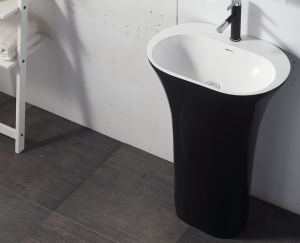
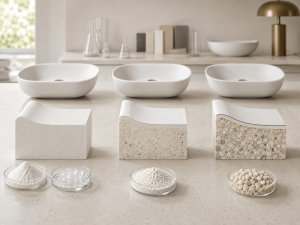
The gel-coated basin
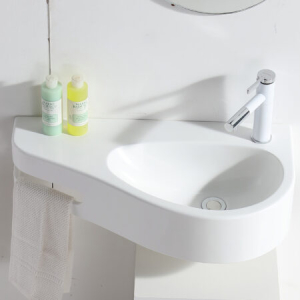
Pure acrylic solid surface basin
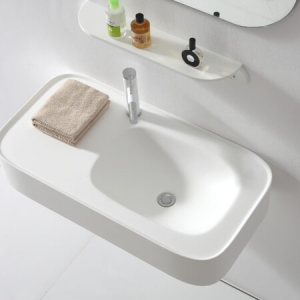
Modified solid surface basin
What Is Pure Acrylic Solid Surface?
A recognized acrylic solid surface formulation typically combines acrylic resin with aluminum trihydrate, also known as ATH or aluminum hydroxide. As a technical reference, DuPont describes its solid surface sheet material as containing approximately 34-45% PMMA and 55-66% aluminum trihydroxide.Gelo’s is the same.
A well-produced pure acrylic solid surface normally offers:
* Strong long-term color stability
* Low water absorption
* Good stain resistance
* A homogeneous, non-porous structure
* Repairable scratches and minor surface damage
* Good performance under repeated hot-and-cold cycles
* Consistent color throughout the material
What Is Modified Acrylic Solid Surface?
Modified acrylic solid surface may use an acrylic-modified polyester resin.
The purpose is normally to balance:
* Product performance
* Castability
* Surface appearance
* Final product cost
For Gelo’s modified solid surface sanitary ware, a yellowing-resistant resin is used full body. Its purpose is to slow the rate of discoloration and help the product retain its original appearance for longer.
What Is Stone Resin?
It usually refers to a cast composite made from resin and mineral powder. Depending on the manufacturer, the filler may contain:
* Calcium carbonate
* Marble powder
* Dolomite powder
* Quartz or silica-containing powder
* A combination of several mineral fillers
Many stone resin basins rely heavily on the gel-coat layer to provide visible surface properties such as whiteness, smoothness and stain resistance. This can lead buyers to overlook the quality of the underlying composite body. A good surface coating cannot compensate for a poorly formulated core. If low-grade resin, unsuitable mineral fillers, excessive filler loading or inadequate curing is used internally, the basin may become brittle and develop crazing or structural cracks over time.
Why Do Some Basins and Bathtubs Crack?
Cracking is rarely caused by one factor alone. It commonly results from a combination of formulation, product design, production, transportation and installation.
1. Resin Shrinkage
Resin contracts during polymerization. If the curing reaction is too fast or uneven, internal stress can remain inside the product.
The product may pass its initial inspection but develop crazing or cracks after repeated use.
2. Unsuitable mineral fillers
As what has saied before,poorly formulated core may cause crack. If unsuitable mineral fillers,the basin may become brittle and develop crazing or structural cracks over time.
Furthermore ,Incorrect Resin-to-Filler Ratio,Incomplete Curing,Excessive Curing Heat,Poor Structural Design,Thermal Cycling,Transportation and Installation,may results the cracking.
What Gelo’s Third-Party Test Results Show
Gelo submitted one sample described as an “modified acrylic solid surface basin” for third-party testing by the National Building Material Testing Center of China.The pure acrylic can have a better performance.
Test Report No. WT2022B01D01691 was issued on November 22, 2022. The sample was evaluated according to requirements referenced from:
* GB 6566-2010
* JC/T 908-2013
* JC/T 2116-2012
* GB/T 6952-2015
* GB/T 3854-2017
The results apply to the submitted sample and should not be interpreted as test results for every product, color or future production batch.
Water Absorption: 0.1%
The tested sample achieved a water absorption result of 0.1%, compared with the specified limit of no more than 0.5%.
Low water absorption is important because it reduces the possibility of moisture entering the product body and contributing to staining, swelling or deterioration.
It does not replace correct sealing and bathroom waterproofing, but it demonstrates that the tested composite itself had low water uptake.
Barcol Hardness: 57
The measured Barcol hardness was 57, exceeding the specified minimum value of 40.
Barcol hardness indicates the surface hardness and degree of cure of a resin-based composite. A result above the specified minimum helps demonstrate that the tested sample had developed adequate surface hardness.
Hardness alone does not prove complete resistance to cracking, but it is a useful indicator when considered together with load, hot-water and aging tests.
Load Resistance: No Visible Damage at 1.1 kN
The basin was subjected to a load of 1.1 kN and showed no visible damage.
The recorded deformation values were:
* Installation surface: 1.1 mm
* Product surface: 0.6 mm
* Overall deformation: 1.2 mm
These results were within the specified maximum limits of 3 mm for the installation surface, 10 mm for the product surface and 10 mm overall.
This test provides evidence that the submitted basin resisted the specified static load without visible cracking or failure.
It should not be interpreted as proof that every basin can support a person or that installation requirements can be ignored.
Hot-Water Resistance: No Cracks or Visible Color Change
After the prescribed hot-water resistance test, the sample showed:
* No cracking
* No bubbling
* No obvious discoloration
* No visible fading
This result is directly relevant to bathroom applications because repeated exposure to hot water can reveal weaknesses in resin curing, filler bonding and surface-layer adhesion.
Aging and Color Stability: ΔE = 0.93
In the color fastness and aging test, the standard allowed a color difference of up to 2 CIE units.
The tested sample recorded:
**ΔE = 0.93**
No cracking, seams, bubbling or surface-texture changes were observed.
A lower ΔE value indicates a smaller measured color difference under the specified test conditions. The result supports the performance of Gelo’s yellowing-resistant resin formulation in the tested modified solid surface sample.
However, accelerated aging results should be presented together with the test method and exposure conditions. They should not be converted directly into a guaranteed number of years of outdoor or indoor service.
Stain Resistance: Zero Recorded Stain Penetration
* Total stain value: 0
* Maximum stain depth: 0 mm
This indicates that the specified test substances did not produce measurable stain penetration in the submitted sample under the test conditions.
Actual bathroom maintenance still depends on the type of contaminant, contact time and cleaning method. Hair dye, strong solvents and aggressive alkaline or acidic cleaners should be removed promptly.
Chemical Resistance: No Visible Damage
After exposure to the specified household chemicals, the sample showed no visible damage.
This helps support its suitability for normal bathroom use, although it does not mean the surface is resistant to every industrial chemical or concentrated cleaning agent.
Chemical Resistance: No Visible Damage
Chemical Resistance: No Visible Damage
After exposure to the specified household chemicals, the sample showed no visible damage.
This helps support its suitability for normal bathroom use, although it does not mean the surface is resistant to every industrial chemical or concentrated cleaning agent.


